
Choosing an SEO Service for Small Local Businesses
Finding a local SEO company that actually delivers results rather than just promising them separates businesses that dominate local search from those that stay buried on page three. The difference often comes down to knowing what questions to ask, which services matter most for your specific market, and how to evaluate agency claims against real performance data.

This guide walks you through the criteria that define top-rated local SEO services, the tactics that drive measurable results for small businesses, and the red flags that signal you’re about to waste money on empty promises.
Choosing the wrong marketing partner can waste time and money. This episode shares practical tips on evaluating transparency, reviewing case studies, and assessing communication styles when hiring an SEO agency. See why Austin Code Monkey stands out as a trusted expert for Texas businesses.
Choosing a Top-Rated Local SEO Partner
The best local SEO companies demonstrate proven expertise through verifiable case studies, transparent reporting, and deep knowledge of Google’s local search algorithms. When you’re evaluating potential partners, you’re looking for agencies that can show measurable improvements in Google Business Profile performance, local pack rankings, and actual customer acquisition for businesses similar to yours. The difference between a truly top-rated agency and one that simply claims expertise often comes down to their willingness to share specific results and explain their methodology in plain language.
1. Verify Local Case Studies
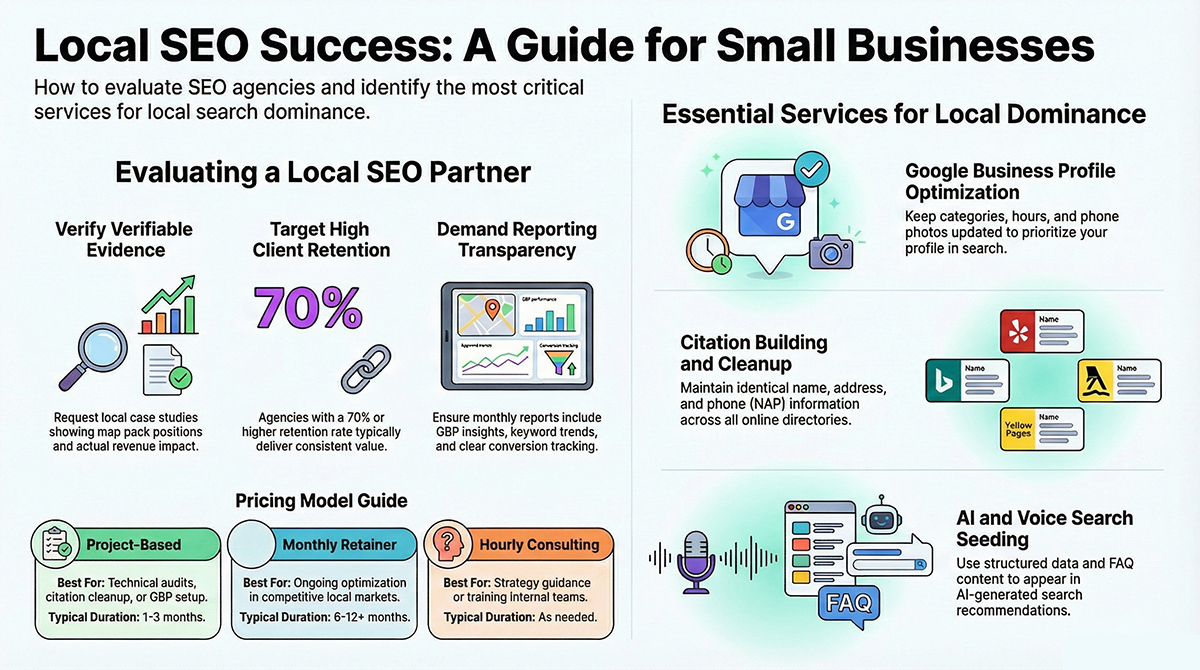
Ask prospective agencies for detailed examples of their work with local businesses in competitive markets. You want to see before-and-after screenshots of Google Map pack positions, Google Business Profile insights showing increased calls and direction requests, and ideally, revenue impact when clients are willing to share it. Generic testimonials without data points tell you very little about an agency’s actual capabilities.
2. Check Google Reviews and Clutch Ratings
Third-party review platforms like Clutch, Google Business Profile, and even Reddit’s r/localseo community offer unfiltered perspectives on agency performance. Look for patterns in feedback—do clients mention specific team members who delivered results, or do reviews feel vague and potentially incentivized? Response rates matter too; agencies that engage thoughtfully with both positive and critical reviews typically extend that same communication quality to client relationships.
3. Evaluate Industry Certifications
Google Partner status indicates an agency meets spending thresholds and passes Google’s certification exams, though it doesn’t guarantee local SEO expertise specifically. More valuable certifications include Local Search Association membership or documented case studies published in industry publications like Search Engine Land. While certifications provide a baseline of credibility, they’re just one factor—plenty of excellent local SEO specialists operate without formal badges but deliver exceptional results.
4. Assess Communication Process
Top-rated agencies establish clear reporting schedules from day one, typically providing monthly performance reviews with transparent KPI tracking. You deserve to understand exactly what work is being done, why specific tactics were chosen, and how results connect to your business goals. If an agency speaks only in jargon or resists explaining its process in accessible terms, that’s a red flag worth noting.
Criteria We Used to Rank Agencies
Evaluating local SEO companies requires looking beyond marketing claims to assess actual service delivery, client outcomes, and business practices. We focused on factors that directly impact your likelihood of success rather than surface-level metrics like agency size or years in business.
Transparency and Reporting
Comprehensive SEO reporting includes ranking positions for target keywords, Google Business Profile insights (views, clicks, calls, direction requests), organic traffic trends, and conversion tracking when possible. The best agencies contextualize data by explaining what changed, why it matters, and what actions they’re taking next. Monthly reports take 15-20 minutes to review and leave you feeling informed rather than overwhelmed or confused.
Service Breadth vs. Depth
Full-service agencies handle everything from technical website fixes to content creation and link building, which works well if you want comprehensive support. Specialists who focus exclusively on local SEO often develop deeper expertise in Google Business Profile optimization, citation management, and local link-building tactics. Your choice depends on whether you have internal resources to handle some marketing functions or prefer a complete outsourced solution.
Client Retention Rate
Agencies with high client retention (70%+ staying beyond one year) typically deliver consistent value and maintain strong relationships. While agencies rarely advertise this metric publicly, you can ask directly during discovery calls. High churn rates often signal overpromising during sales, poor communication, or inability to demonstrate ROI.
Essential Local SEO Services for Small Businesses
A complete local SEO program addresses multiple ranking factors that Google uses to determine which businesses appear in local search results and map pack positions. Each service component builds on the others, creating a foundation for sustained visibility in your geographic market.
Google Business Profile Optimization
Your Google Business Profile (formerly Google My Business) serves as your primary digital storefront in local search. Complete optimization includes selecting the most accurate business categories, uploading high-quality photos that showcase your location and services, posting regular updates about offers or events, and keeping your business hours current. Google prioritizes profiles that demonstrate active management and provide comprehensive information to searchers.
Local Keyword Mapping
Local keyword research identifies the specific phrases people in your area use when searching for your services, often including neighborhood names, “near me” variations, and geo-modifiers. A coffee shop in downtown Austin might target “specialty coffee downtown Austin” rather than just “coffee shop,” capturing searchers with clear local intent. This research informs your website content, meta descriptions, and Google Business Profile description.
On-Page Technical Fixes
Technical optimization helps Google properly crawl, understand, and index your website while recognizing your local relevance. Key elements include:
- Consistent NAP information: Your business name, address, and phone number appear identically across all pages
- Local business schema markup: Structured data that helps search engines parse your location information
- Mobile responsiveness: Your site displays correctly on smartphones, where most local searches happen
Citation Building and Cleanup
Citations are online mentions of your business name, address, and phone number on directories, review sites, and local business listings. Building citations on authoritative platforms like Yelp, Apple Maps, and industry-specific directories helps Google verify your business’s legitimacy and location. Equally important is citation cleanup—correcting inconsistent information across the web that can confuse search engines and dilute your local ranking signals.
Review Management
Online reviews influence both search rankings and consumer decisions, making review generation and response a critical local SEO component. Top-rated companies implement systems to encourage satisfied customers to leave reviews, monitor multiple platforms for new feedback, and craft thoughtful responses that demonstrate their commitment to customer satisfaction. The goal isn’t perfection—it’s showing you value customer input and address concerns professionally.
Local Link Building
Links from other local businesses, chambers of commerce, local news outlets, and community organizations signal to Google that you’re an established part of your local business ecosystem. Links from local sources carry more weight for local rankings than generic directory submissions. Effective local link building often involves sponsoring community events, participating in local business associations, or earning coverage in regional media.
Voice Search Optimization
Voice searches tend to be longer and more conversational than typed queries, with many including local intent (“Where’s the best pizza near me?”). Optimizing for voice means targeting question-based keywords, creating FAQ content that answers common customer questions, and keeping your Google Business Profile information complete since voice assistants often pull answers directly from profiles.
LLM Seeding for AI Search
Large language models powering AI search tools like ChatGPT, Google’s AI Overviews, and Bing Chat increasingly influence how people discover local businesses. LLM seeding involves creating structured, authoritative content about your business, services, and expertise that AI systems can reference when answering user queries. This emerging tactic positions your business to appear in AI-generated recommendations, not just traditional search results.
What Makes a Local SEO Company Stand Out in Competitive Markets
Agencies serving dense metropolitan areas like New York City develop specialized skills that translate to success in any competitive local market. Companies operating in saturated markets understand that ranking requires more sophisticated tactics than basic optimization alone.
Dense Market Competition Analysis
In cities where dozens of similar businesses compete for the same keywords, top agencies conduct thorough competitive research to identify ranking opportunities competitors have overlooked. This might mean targeting neighborhood-specific terms, finding content gaps in competitor websites, or building relationships with local link sources others haven’t approached. The analysis phase often determines campaign success more than the execution itself.
Hyper-Local Content Strategy
Rather than creating generic service pages, effective local content targets specific neighborhoods, landmarks, and community topics your customers care about. A plumbing company might publish guides about common issues in older homes prevalent in certain zip codes, or a restaurant might highlight ingredients sourced from nearby farms. This hyper-local approach helps you rank for long-tail searches while demonstrating a genuine community connection.
Borough-Specific Link Opportunities
Major metropolitan areas offer unique link-building opportunities through borough-specific business associations, neighborhood blogs, and local event sponsorships. Agencies experienced in competitive markets know how to identify and secure geographically relevant links that carry significant local ranking power. They’ve built relationships with local publishers and understand which opportunities provide real value versus those that waste budget.
Cost and ROI Expectations for Local SEO
Local SEO pricing varies widely based on market competitiveness, service scope, and whether you’re working with a specialized local agency or a full-service digital marketing firm. Understanding typical investment levels helps you budget appropriately and identify proposals that seem unrealistically cheap or expensive.
Most local SEO services fall into monthly retainer arrangements. Project-based pricing works for specific initiatives like citation cleanup or Google Business Profile optimization but doesn’t provide the ongoing optimization that local SEO requires. You’re typically looking at a minimum six-month commitment to see meaningful results, with the most significant ranking improvements often appearing in months three through six.
Project vs. Monthly Retainer Pricing
Project-based engagements work well for one-time needs like technical audits, citation cleanup, or Google Business Profile setup. However, local SEO fundamentally requires ongoing work—regular content creation, review monitoring, link building, and algorithm adaptation. Monthly retainers provide the sustained effort needed for competitive local rankings while allowing agencies to adjust tactics based on performance data.
| Pricing Model | Best For | Typical Duration |
|---|---|---|
| Project-Based | Technical audits, citation cleanup, GBP setup | 1-3 months |
| Monthly Retainer | Ongoing optimization, competitive markets | 6-12+ months |
| Hourly Consulting | Strategy guidance, training internal teams | As needed |
Break-Even Timeline Calculation
Most businesses see their first organic conversions within 60-90 days, with acquisition costs decreasing over time as rankings improve and organic traffic compounds. The timeline depends on your market competitiveness, current online presence, and how aggressively competitors are optimizing their own local search presence.
Lifetime Value Impact
Local SEO delivers compounding returns because rankings and domain authority build over time. A customer acquired through paid advertising costs money with each click, while organic rankings continue generating traffic without ongoing per-click costs. When you factor in customer lifetime value—repeat purchases, referrals, and long-term relationships—local SEO typically delivers strong ROI, though it requires patience during the initial investment period.
Questions to Ask Before You Sign a Contract
The discovery process reveals as much about an agency’s practices as their answers to your questions. Top-rated companies welcome detailed questions and provide specific, jargon-free responses that demonstrate their expertise and approach.
Scope of Work Clarification
Request a detailed breakdown of what work the agency will perform each month, including specific deliverables like content pieces, citations built, or technical optimizations completed. Understanding exactly what you’re paying for prevents misaligned expectations and helps you evaluate whether the proposed work matches your business situation. Ask how they’ll adapt the strategy if initial tactics don’t produce expected results.
Reporting Frequency and KPIs
Establish which metrics the agency will track and how often you’ll receive performance updates. Meaningful KPIs for local SEO include:
- Google Business Profile views and actions: Direct measures of local search visibility
- Local keyword rankings: Position tracking for your target geo-modified terms
- Organic traffic from local searches: Website visits from people in your service area
- Conversion actions: Phone calls, form submissions, direction requests tied to organic search
Vanity metrics like total website traffic or generic keyword rankings tell you little about local SEO performance specifically.
Exit Clause Details
Understand what happens if you decide to end the relationship—can you leave with reasonable notice, or are you locked into a long-term contract? Clarify who owns the content created, whether you’ll retain access to tools and accounts, and if the agency will provide transition support. Reputable agencies typically require 30-60 day notice periods but don’t trap clients in multi-year commitments.
First-Quarter KPIs to Track Success
The first three months of a local SEO campaign focus on foundation-building—technical fixes, citation cleanup, and initial content creation. While dramatic ranking improvements rarely happen immediately, you can track early indicators that predict long-term success.
Google Business Profile Views
Profile views indicate how often your business appears in local search results and map pack positions. Increasing view counts, even before you rank first, show that Google is displaying your profile more frequently. Pay attention to whether views come from direct searches (people specifically looking for your business name) or discovery searches (people finding you while searching for your services).
Direction and Call Clicks
Direction requests and phone calls represent high-intent prospects actively trying to reach your business. Track the ratio of profile views to actions—if 100 people see your profile but only 2 click for directions, that suggests issues with your profile optimization, photos, or review quality. Improving this conversion rate often delivers faster results than simply increasing visibility.
Local Keyword Ranking Movement
Monitor your position for 10-15 core local keywords throughout the first quarter. You’re looking for upward trends rather than specific positions—moving from position 18 to 12 indicates progress even though you’re not on page one yet. Track both map pack rankings (the three businesses shown with map results) and organic rankings separately since they’re influenced by different factors.
Organic Revenue Attribution
Set up conversion tracking to connect organic search traffic to actual business outcomes like form submissions, phone calls, or e-commerce transactions. Even if total revenue from organic search seems small initially, you’re establishing baseline metrics and proving that organic traffic converts. This data becomes invaluable for calculating ROI as traffic volumes increase.
Emerging Tactics Like Voice Search and LLM Seeding
The local search landscape evolves constantly as new technologies change how people discover businesses. Forward-thinking agencies invest in emerging tactics before they become standard practice, giving clients early-mover advantages.
Conversational Keyword Targeting
Voice searches typically sound more natural than typed queries—”What’s the best Italian restaurant open now near me?” versus “Italian restaurant downtown.” Optimizing for conversational patterns means creating content that answers complete questions rather than just targeting short keywords. FAQ pages, blog posts addressing common customer questions, and natural language in your website copy all support voice search optimization.
Structured Data for AI Snippets
Schema markup helps AI systems understand your business information, services, pricing, and expertise. As AI Overviews and chatbot recommendations become more prevalent in search, businesses with comprehensive structured data will appear more frequently in AI-generated answers. This includes not just basic local business schema but also FAQ schema, service schema, and review schema that provide rich context about your offerings.
Ready to Grow With Austin Code Monkey
Austin businesses face unique local SEO challenges in one of the country’s fastest-growing and most competitive markets. At Austin Code Monkey, we’ve helped local restaurants, healthcare providers, home services companies, and professional services firms cut through the noise and connect with customers actively searching for their services.
We combine technical expertise with creative local content tactics, and we’re early adopters of emerging approaches like LLM seeding that position our clients ahead of competitors still using outdated methods. Every strategy we recommend is tailored to your specific business goals, market position, and growth timeline, not a one-size-fits-all template.
Schedule your free consultation to discover how Austin Code Monkey can help your business dominate local search results.
FAQs About Hiring a Local SEO Company
How long before local SEO results appear for small businesses?
Most businesses see initial Google Business Profile improvements within the first month, with significant local ranking gains typically occurring over three to six months of consistent optimization. The timeline depends on your market competitiveness, current online presence, and how aggressively competitors are optimizing their own local search presence.
Can PPC and SEO work together for local lead generation?
Yes, combining local PPC ads with SEO creates comprehensive search visibility, allowing you to capture immediate clicks while building long-term organic presence for sustainable growth. Many businesses use PPC to generate leads during the initial months of an SEO campaign, then gradually reduce ad spend as organic rankings improve and deliver traffic without per-click costs.
Do multi-location businesses need separate SEO campaigns for each location?
Each business location requires its own Google Business Profile and location-specific optimization, though the overall strategy can be coordinated within a single comprehensive local SEO campaign. You’ll want unique content for each location page, separate citation profiles, and individual review management, but the technical foundation and brand-level link building support all locations simultaneously.
Ready For Your Business to Dominate Local SEO Rankings in Austin?
Call Austin Code Monkey Today!

Hours: Monday – Friday, 10:00 AM – 10:00 PM
Visit https://austincodemonkey.com/ to learn more about our comprehensive Local SEO services, and discover why Austin Code Monkey is your Austin SEO Company.
Your competitors are already investing in SEO. Don’t fall behind—partner with Austin Code Monkey and start capturing more customers searching for SEO for small business Austin services today. We’re ready to help your home services business thrive in the competitive Austin market through strategic search engine optimization and professional graphic design services.